Transitioning to a wheelchair is a major life adjustment. It’s natural for seniors to feel a loss of independence, and the idea of being loaded into a specialized van for the first time can trigger serious anxiety. If you’re a caregiver scheduling that first wheelchair-accessible medical ride, preparation is your best tool for easing their nerves (and yours).
1. Explain the Boarding Process (No Surprises)
The biggest fear is often the unknown, specifically: "How am I going to get in there?"
If you are using a modern NEMT provider (like one driving a newer hybrid minivan rather than a massive, noisy box truck), the process is designed to be gentle.
- Explain the Ramp
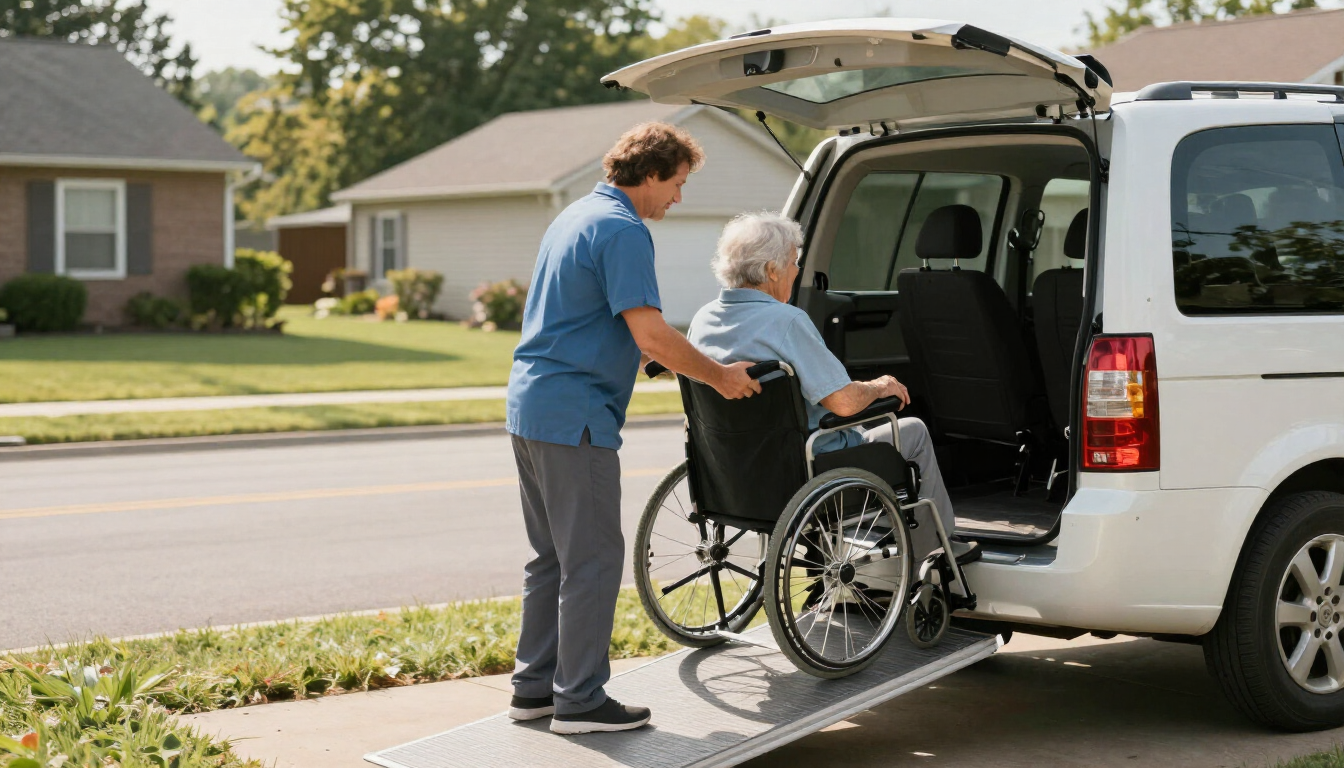
- Tell them they won’t be lifted or bumped. A low-incline ramp will extend from the rear or side of the van, and the driver will smoothly push them up the ramp and into the cabin.
- The Securement
- This is crucial. Explain that they will be locked in using a professional system. If your provider uses the Q’Straint Q’TRAX L-Track system, let them know it’s the gold standard. It involves four heavy-duty straps that lock the wheelchair frame securely to the floor, plus a shoulder and lap belt for the passenger. They aren’t going to roll or tip.
2. Do a Pre-Ride Wheelchair Check
Before the driver arrives, do a quick once-over of the chair:
- Tire Pressure
- Make sure the tires are properly inflated for a smoother ride.
- Footrests
- Ensure the footrests are attached and locked in place. The passenger’s feet must be secure during transport.
- Brakes
- Check that the wheel locks (brakes) engage fully. The driver will lock these once the chair is in position.
3. Pack a "Comfort and Go" Bag
NEMT rides are comfortable, but medical appointments can mean long days. Have a small bag ready to go:
- Jacket or Sweater
- Vans are climate-controlled, but medical clinics are notoriously freezing.
- Water and a Snack
- If it’s allowed before their specific appointment.
- Important Documents
- ID, insurance cards, and any necessary medical paperwork in an easily accessible folder.
4. Introduce the Driver
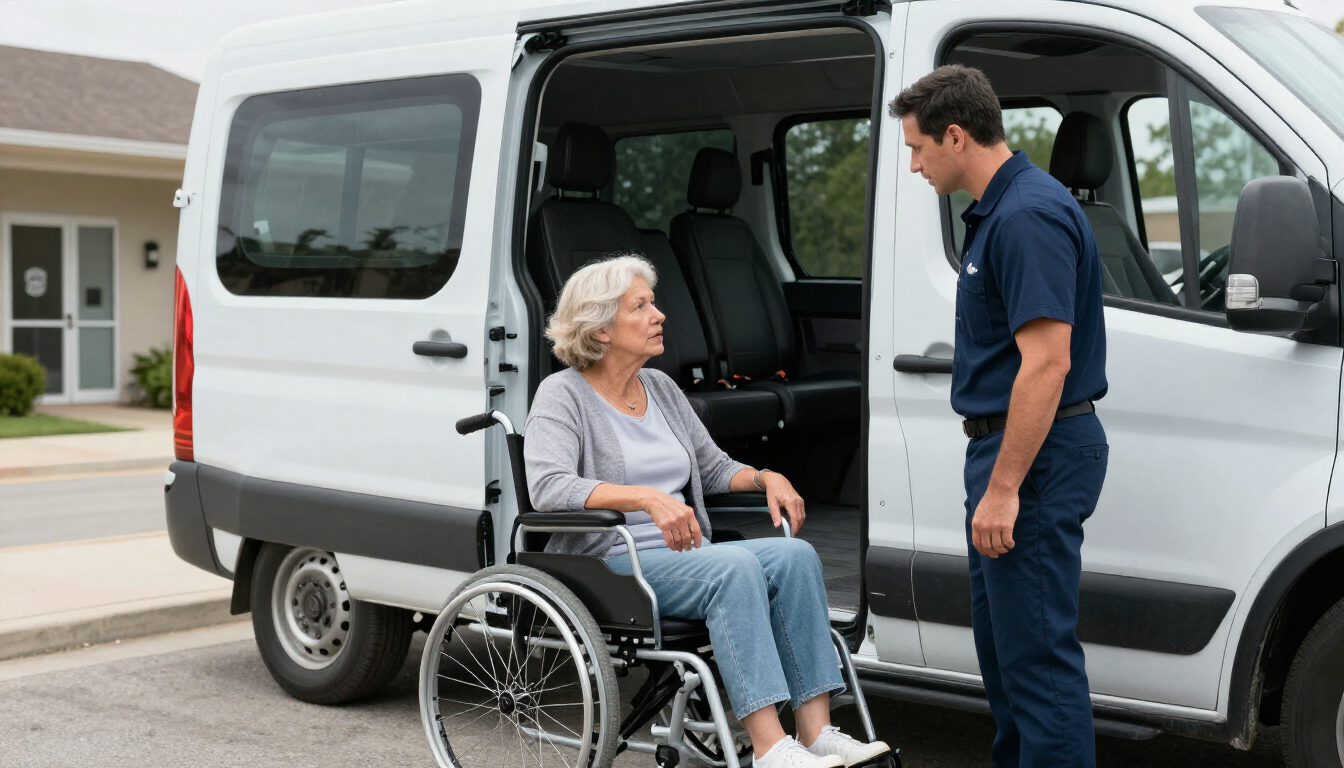
When the vehicle arrives, don’t just rush through the loading process. Take a moment to introduce your loved one to the driver by name.
Professional NEMT drivers are trained in passenger sensitivity (PASS certification). A good driver will take a moment to say hello, explain what they are doing as they attach the tie-downs, and make sure the passenger is comfortable before closing the doors.
5. Ride Along (If Possible)
If it’s their very first time in an accessible van, see if you can ride along as a companion. Having a familiar face sitting next to them makes the unfamiliar sights and sounds of the securement process much less intimidating.
Frequently Asked Questions
Can any wheelchair be transported?
Most standard manual and power chairs are fine. However, extremely oversized chairs, specialized tilt-in-space chairs, or mobility scooters sometimes require specific vehicle configurations. Always tell the dispatcher the exact type of chair when booking.
Do we need to provide the tie-down straps?
No. A professional, compliant NEMT provider will have all the necessary Q’Straint (or equivalent) securement equipment installed in the vehicle.
Booking a first wheelchair-accessible ride?
Our ADA rear-ramp vans and Q’Straint securement keep Wichita passengers safe and comfortable from door to destination.
Found this helpful? Share it with family and friends.